Showing posts with label coral reef. Show all posts

Monday, June 9, 2014

Eight kids and World Ocean Day


Another year had passed and concerned people were celebrating World Ocean Day on June 8th. We all depend on a healthy and clean ocean for our very survival and the latest scientific research is painting a dismal picture of things to come. Most of us know we need to act to turn around the damage caused by unwise use, pollution, and over fishing. But few of us do anything.

This year’s theme is, “Together we have the power to protect the ocean” and all over the globe small groups of people set out to make a difference.


Perhaps the smallest but most well meaning effort was on the tiny island of Langkawi just a few kilometers from the Thailand- Malaysia border. There the Andaman Resort operates a small coral nursery that both educates children and rehabilitates a tsunami ravaged coral reef.

This year the small band of young volunteers (and a couple of parents who wanted to get involved with their children) were busy maintaining the nursery, feeding the lobsters, and grafting tiny corals when World Ocean Day rolled around.

What could eight dedicated children do to save the sea; how could so few make a difference?


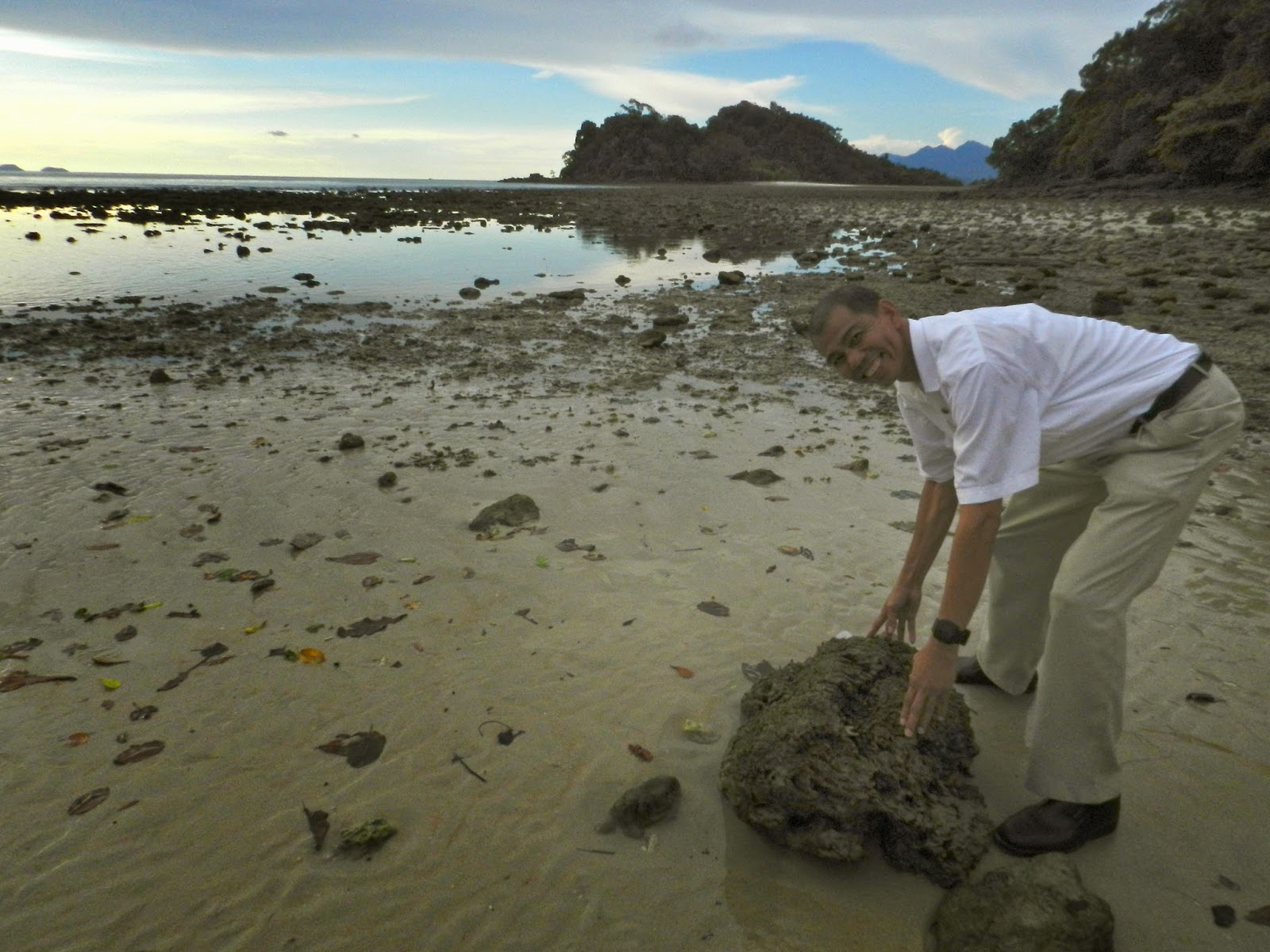
When the 2004 tsunami roared ashore, the huge wave swept tens of thousands of living corals off the fringing reef and up into the ancient rainforest. Over the last 4 years guests at the luxury resort have collected by hand about 100 tonnes of dead coral skeletons and carried them to the coral nursery.

There, with the assistance of resort staff, the dead coral rock is recycled into mini-Artificial Reef Modules that provide much needed shelter for young marine life and a stable substrate for corals to grow on. They are heavy, have ‘baby’ corals attached, and are difficult to move.


“But we want to do it! We want to take the corals out to the reef”, said Liam who was quickly backed up by his determined younger brother, Callum. Liam is one of the hard working volunteers that regularly return to the Andaman to work at the Coral Nursery. 

World Ocean day marked the fourth visit of his family since the end of 2013 and school holidays. Determined to become a marine biologist because of his Nursery experiences, Liam led the way.

Bamboo from the rainforest served as a framework, odd pieces of rope and ‘strange’ knots worked as fastenings, and inner tubes from tires provided flotation. The kids built their own raft and managed to load the mini- Artificial Reef Modules aboard. Plastic kitchen utensils splashed water over the living corals and swimmers in life jackets towed the raft out to the reef where the Modules were lowered to the ocean floor.


Coral reefs comprise the most diverse ecosystems on Earth but are now threatened with destruction. They occupy just over 0.15% of the world’s oceans, yet incredibly they provide a home for an estimated 25% of all marine species. They really are the “engine room” of the sea and their loss will cripple the marine environment on a global scale.


Productivity is higher than in other tropical waters and 6 million tons of fish are taken each year from the world’s coral reefs. Most of this stays in protein-poor countries. Langkawi’s community is largely dependent on local fisheries for protein and the next generation needs the Andaman Reef. 


Biodiversity is the loudest catch cry in environmental research today. It is a measure of the complexity of an ecosystem and is now thought to be related to the health of the entire planet. Southeast Asian coral reefs have the highest levels of biodiversity of all the world’s marine ecosystems, perhaps the highest biodiversity since the beginning of life on Earth. 


But, recent surveys show that 10% of the world’s coral reefs are already dead.  It is estimated that another 60% of the world’s reefs are at risk due to destructive, human-related activities.  Man’s threat to the health of reefs is particularly strong in Southeast Asia, where an appalling 80% of reefs are endangered.  Sadly, Southeast Asian coral reefs are now the world’s most threatened, being impacted by the activities of man.


The global economic value of these tiny coral reefs is staggering, estimated at $30 billion annually. Southeast Asia’s coral reef fisheries alone yield about $2.4 billion annually. According to the WWF, the economic cost over a 25 year period of destroying one kilometre of coral reef is somewhere between $137,000 and $1,200,000.  Conversely, the economic benefit of saving one kilometre of reef is the same.


The children worked most of the afternoon putting six Modules with 30 coral colonies in place. By doing something small but highly visible in Langkawi the children helped to focus attention on the plight of reefs around the world.


Sunburned, thirsty, scraped knuckles, and smiling, the children returned to shore and the cool of the rainforest to share their adventure with their parents.

Will their experience change the way they live? It has already.
The kids proved that even one person can make a difference and “Together we have the power to protect the ocean!”


Tuesday, May 27, 2014

Slow Life and the Andaman Sea; A 'Must Watch' Video


I was just enchanted by the great work of photographer Daniel Stoupin when it came to my attention several months ago. Many animals appear to be motionless relative to our busy lives. But they arent; they do move and can be caught on camera. Coral reefs take on a new perspective through his lens.

Corals evolved about 550 million years ago and have survived all that Nature could 'throw' at them. Sadly, they are not doing well since modern industrialized man turned his interests to the sea. Nearly half of all the world's coral has died in the last 50 years.


Slow Life


http://vimeo.com/88829079


"Slow" marine animals show their secret life under high magnification. Corals and sponges are very mobile creatures, but their motion is only detectable at different time scales compared to ours and requires time lapses to be seen. These animals build coral reefs and play crucial roles in the biosphere, yet we know almost nothing about their daily lives.


This clip, as well as stock footage, is available in 4k resolution. Make sure you watch it on a large screen! You won't be able to appreciate this clip or see individual cells moving in a sponge on a smartphone. If you have a full-HD screen, when you enter full-screen mode, please press on "view actual size" next to the HD icon to improve sharpness.


To make this little clip I took 150000 shots. Why so many? Because macro photography involves shallow depth of field. To extend it, I used focus stacking. Each frame of the video is actually a stack that consists of 3-12 shots where in-focus areas are merged. Just the intro and last scene are regular real-time footage. One frame required about 10 minutes of processing time (raw conversion + stacking). Unfortunately, the success rate was very low due to copious technical challenges and I spent almost 9 long months just to learn how to make these kinds of videos and understand how to work with these delicate creatures."


Monday, May 5, 2014

Thomson Reuters to the Rescue; CEO Circle Builds Artificial Reefs


It’s just on a month ago that staff at The Andaman Resort were preparing for the arrival of their biggest ever CSR group. Community and Social Responsibility (CSR) has become the latest team activity of concerned businesses around the world who realize that they do owe something to the environment and community that has contributed in part to their success.


The Andaman’s group was the CEO Circle from the huge Thomson Reuters Corporation and the participants were all about getting things done and moving ahead. What was wonderful is that they had chosen the Andaman for its incredible natural setting and geological history and, perhaps most significantly, the coral reef rehabilitation program. They wanted to make a difference for this tiny tropical island and its people.

Those following this blog will know that the 2004 tsunami devastated coral reefs in the Andaman Sea and parts of the Indian Ocean. The Andaman Resort has been working to reverse the damage through reef rehabilitation and an artificial reef project that’s just off the ‘drawing board’.

Support for the reef based projects has been strong through earlier CSR group activities and from the continuous ‘stream’ of concerned guests. But now we had a resort filled with eager participants armed with an understanding of how pressing ocean and coral reef conservation was becoming in this part of the world. This was going to be great!


The group was split up into four teams with different tasks. In the end all of these would mesh together for the final result; more coral and badly needed shelter on a reef stripped bare by a tsunami generated by the third largest earthquake in recorded history.

Their smallest team mounted tiny living ‘coral chips’ on common cement building bricks. The ‘chips’ grow quickly in the Andaman’s coral nursery where they are kept until ready for transplanting. Currently, the nursery is transplanting three species that have proven to be hearty and fast growing. Parent material is selected from colonies that are living in warm, shallow water; these may provide future generations with a head start in dealing with slowly increasing ocean temperatures.

Their largest team was given the unenviable task of building concrete “mini-ARMs”. This is an acronym for miniature artificial reef modules. These small concrete hemispheres are about 500mm in diameter, have three or four small entrances, and are covered in coral rubble. The rubble is the product of the tsunami. When the wave struck, tens of thousands of live corals were swept ashore and up into the rainforest.

We collect these coral skeletons and with the assistance of guests have now ‘stockpiled’ over 100 tons of limestone that can be recycled to the reef for future coral growth. The skeletons are incorporated into the “mini-ARMs” concrete and produce a natural looking exterior ripe for colonization by young coral colonies and numerous invertebrates.


“Mini-ARMs” are very important; they not only provide the right kind of surface to support future coral growth, they provide shelter and growing room for predatory fish like groupers that are now overfished by the local community. Groupers are mid-sized predators that are important in the reef food web and are also highly sought after by man.


A third team took older coral colonies off the cement bricks where they had ‘matured’ in the nursery for up to six months. These corals were then transplanted to the Resort’s stockpiled “mini-ARMs” and carried down to the sea for their journey out to the reef edge.


The fourth team was our engineers (the term is used loosely). Their task was to turn a pile of tire tubes, bamboo, and pieces of rope into an ocean going craft capable of carrying the heavy concrete “mini-ARMs”, twin propulsion units (CEOs with paddles), and a coral life support system (CEOs with buckets to keep the coral transplants wet).

Once at the reef edge, snorkelers would help to drop the “mini-ARMs” into place in locations I had earlier selected and marked with buoys. The CEO Circle of Thomson Reuters was terrific placing 24 “mini-ARMs” and a total of 100 corals on the reef.

They also made an additional 40 “mini-ARMs” and added nearly 100 tiny corals to the nursery. These are now being placed on the reef by guests that have followed in the CEO Circle’s footsteps.


Since the CEO Circle’s visit, I have met with the Department of Fisheries, Langkawi’s four fishing community leaders, Lafarge Malaysia (Kedah Cement), and the National University of Malaysia. The outcome of this is that we now have broad approval for the next stage of the project which is the placing of full size artificial reef modules (ARMs) for the benefit of the people of Langkawi. Our first ‘scientifically’ designed artificial reef will be in Datai Bay near the small island called Anak Datai.

The efforts and financial contribution of the CEO Circle of Thomson Reuters has acted as a catalyst for the establishment of a planned non-profit foundation to oversee the artificial reef’s development and the continuation of this project.

But why do we feel that this is so important? Why do we need corals and groupers back on the reef?

What wasn’t known before but has recently been published in Ecology Letters (February, 2013) is that the reduction in numbers of just one predator like the groupers can bring about the extinction of many others. This helps to explain the ancient global catastrophes caused by things like meteorites, volcanoes, and climate changes.

Lead researcher Dr Frank van Veen of the University of Exeter's Centre for Ecology and Conservation said: “We have shown that the complex ripple effect of a change in population size across food webs is more sensitive than previously thought and that a reduction in the numbers of one carnivore can lead to the extinction of another carnivore species. We also found evidence that the second extinction can trigger further ones, leading to a cascade of extinctions, like dominoes toppling over.”

This disturbing finding seems to explain why our 'single species' approach to conservation, the one most used in fisheries management, just does not work. As a marine ecologist I am very concerned. Our fisheries are in crisis! The FAO estimates that 70% of world commercial fisheries have already collapsed or are now collapsing. I have been told that Malaysian fishermen have caught about 95% of their stocks. Langkawi depends on seafood and since the tsunami, fishing pressure and the lack of suitable habitat is driving local reef carnivores, like the groupers, toward the brink of extinction regionally.

If Dr van Veen is right then we can expect other carnivors that are not part of our fisheries to dive toward extinction and still more to follow them. The bulk of Langkawi’s ocean food pyramid may collapse in a very short time.

More than a third of Indian Ocean coral reef species are now at risk of local extinction according to a study published in Ecology Letters (2011). The cause is the continuous warming of our planet but the impact may be far greater than predicted if the work of Dr Frank van Veen is correct. The loss of just one temperature sensitive predator can bring down even the heat tolerant species. The ripple effect on coral reefs may be devastating with the loss of most of the fisheries that now support 200 million people in tropical regions.


Here on the tiny island of Langkawi we are doing what we can to repair the damages caused by a tsunami that changed not only our reef but our future. But we are doing more than that.

With the help of groups like CEO Circle from Thomson Reuters, we are showing the world that we all have a part to play in maintaining this planet’s environment. And we are showing others that each business and each individual can accept their responsibility and really can make a difference.


Thursday, April 10, 2014

A Reef for Our Children By Dr. Gerry Goeden


On December 26, 2004 a tsunami generated by the Sumatra-Andaman earthquake, the third largest earthquake in recorded history, roared into Datai Bay on the Northwest corner of Langkawi,Malaysia. This bay and its nearby surroundings support the best coral reef development in the sleepy waters of this quiet island. When the tsunami struck, it swept tens of thousands of coral boulders shoreward stripping the southern half of the reef of most of its marine life and depositing it on the beach and in the adjacent rainforest.


Much of the coral rubble was produced by the tsunami and now hinders regeneration.

In September, 2010 The Andaman Resort commissioned a survey of the Andaman Reef platform. Contrary to appearances the Andaman Reef was still ‘alive and breathing’ but needed urgent help. Their solution was a two pronged approach.

First, they initiated a “coral clearing” program in which staff and guests clear away dead coral from among the still living colonies. This prevents further damage from tumbling coral boulders during times of heavy wave action. Using just their bare hands and wheelbarrows, hundreds of enthusiastic volunteers have already removed about 80 tonnes of rock greatly improving the chances of survival for the live colonies.

Guests involved in coral clearing learn about tsunami damage 'first hand'.

Secondly, the Resort owners dipped deep into their pockets and built a Coral Nursery. This swimming pool-sized saltwater reef is capable of producing several thousand small corals each year using ‘cuttings’ taken from the wild. 

It is also a wonderful education center where people can view marine life and kids can be a “marine biologist” for a day and really get their hands dirty ‘saving the environment’. When the little nursery corals are tough enough they will be re-located to the Andaman Reef into small coral gardens.

So why all the effort?

Often called “rainforests of the sea”, coral reefs comprise the most diverse ecosystems on Earth but are now threatened with destruction. They occupy just over 0.15% of the world’s oceans, yet incredibly they provide a home for an estimated 25% of all marine species. They really are the “engine room” of the sea and their loss will cripple the marine environment on a global scale. Doing something small but highly visible in Langkawi helps to focus attention on the plight of reefs around the world.


Productivity is higher than in other tropical waters and 6 million tons of fish are taken each year from the world’s coral reefs. Most of this stays in protein-poor countries.  Well managed coral reefs have an annual yield on average of 15 tons of seafood per square kilometre. Langkawi’s community is largely dependant on local fisheries for protein and the next generation needs the Andaman Reef. As the eco-tourist industry increases so too will the cash returns from this rehabilitation program. A well managed reef lets you to ‘have your cake and eat it too’.


Biodiversity is the loudest catch cry in ecology. It is a measure of the complexity of an ecosystem and is now thought to be related to the health of the entire planet. Southeast Asian coral reefs have the highest levels of biodiversity of all the world’s marine ecosystems, perhaps the highest biodiversity since the beginning of life on Earth.  Sadly, Southeast Asian coral reefs are now the world’s most threatened, being impacted by the activities of man. Coastal development, chemical runoff from the land, and destructive fishing practices head the list and reef biodiversity is falling fast.


Most Asian fish are caught before they are mature and can reproduce.


The global economic value of these tiny coral reefs is staggering, estimated at $30 billion annually. Southeast Asia’s coral reef fisheries alone yield about $2.4 billion annually. Again, most of this remains in poor countries. More importantly reefs provide renewable resources if managed with an eye to the future; much needed income year after year. According to the WWF, the economic cost over a 25 year period of destroying one kilometre of coral reef is somewhere between $137,000 and $1,200,000.  Conversely, the economic benefit of saving one kilometre of reef is the same.


Recent surveys show that 10% of the world’s coral reefs are already dead.  It is estimated that another 60% of the world’s reefs are at risk due to destructive, human-related activities.  Man’s threat to the health of reefs is particularly strong in Southeast Asia, where an appalling 80% of reefs are now endangered. 


In the face of all this gloom the Andaman Reef story is heartening in that a small private business, its customers, and the surrounding community are taking on the responsibility of doing something positive toward environmental rehabilitation in the sea. By saving a coral reef the people of the Andaman are protecting the future of our children.